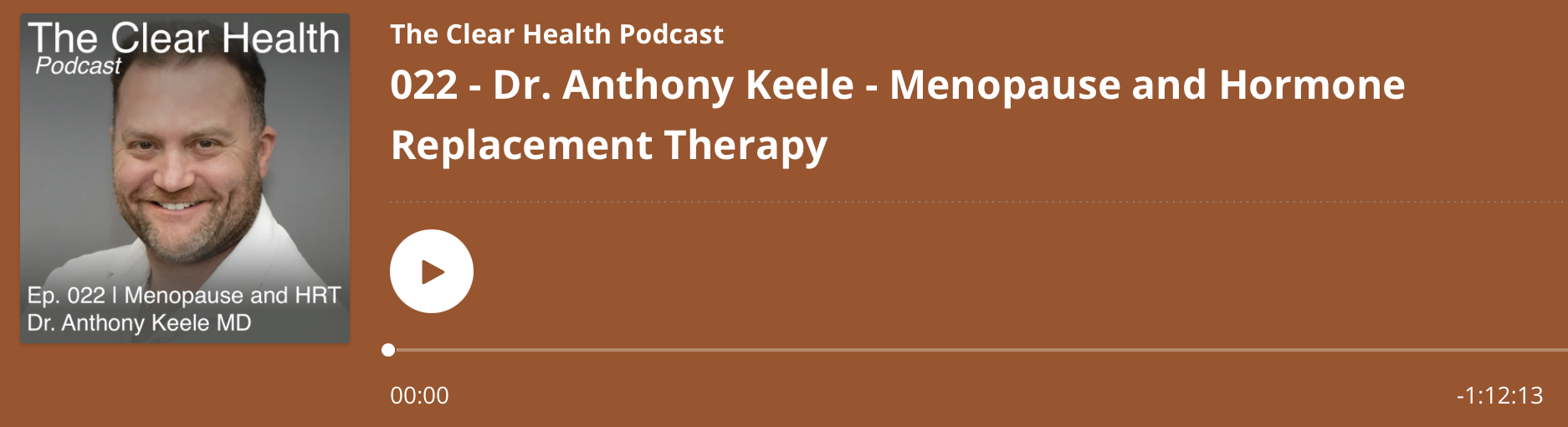
Many women nearing age 50 come into my office suffering from the effects of low progesterone and estrogen that naturally occurs as women get older. Entering this stage of life is extremely frustrating as many physicians are unsure of how to treat the symptoms. In the latest episode of The Clear Health Podcast Dr. Anthony Keele MD, an expert in HRT, emphasizes the importance of understanding menopause as a gradual process that can span several years, often starting in a woman’s mid-30s. Hormonal decline can lead to a range of symptoms, including hot flashes, mood swings, brain fog, decreased libido, weight gain, and sleep disturbances.
The Impact of the Women’s Health Initiative Study
One significant turning point in the discourse surrounding hormone therapy was the Women’s Health Initiative (WHI) study, which began in 1991. Dr. Keele explains how the findings, published in 2002, led to widespread fear and reluctance among healthcare providers to prescribe HRT due to concerns over increased risks of heart disease and cancer. The study primarily involved older women, which skews the applicability of its findings to younger women undergoing menopause. As a result, many women were left without the option of HRT, despite its potential benefits.
Changing Perspectives on HRT
Recent changes from the FDA, including the removal of the black box warning for estrogen replacement, have reignited discussions about the safety and efficacy of HRT.

This decision did not happen overnight. Evidence from several trials across many years point to the safety and efficacy of hormone replacement therapy. The following timeline shows this gradual evolution.
-
2002 – Initial Women’s Health Initiative (WHI) results prompted the FDA to issue a broad black box warning on menopausal hormone therapy after findings suggested increased risks of breast cancer, coronary heart disease, stroke, and venous thromboembolism in older postmenopausal women using oral conjugated equine estrogen with medroxyprogesterone acetate.
-
2004–2007 – Subsequent WHI subgroup analyses demonstrated that absolute risks were substantially lower in women aged 50–59 and in those closer to menopause, and that estrogen-only therapy did not increase—and may have reduced—breast cancer risk, challenging the original generalized conclusions.
-
2007–2010 – The “timing hypothesis” emerged, supported by reanalyses and early trials, showing that cardiovascular risk is strongly influenced by age and time since menopause, with neutral or potentially beneficial effects when hormone therapy is initiated early.
-
2010–2013 – Trials such as KEEPS and ELITE reinforced that early initiation of hormone therapy is associated with less atherosclerotic progression, further undermining the assumption that hormone therapy uniformly increases cardiovascular risk.
-
2010s – Accumulating evidence clarified that risk varies by formulation, dose, and route, with transdermal estrogen associated with lower thrombotic risk than oral estrogen and micronized progesterone appearing safer than synthetic progestins.
-
2017 – Major professional societies (NAMS, Endocrine Society, ACOG) issued updated position statements affirming that hormone therapy is safe and effective for healthy, symptomatic women under age 60 or within 10 years of menopause when appropriately individualized.
-
2020–2022 – Long-term WHI follow-up data showed no increase in all-cause mortality and supported a more balanced risk–benefit interpretation, influencing FDA labeling language to emphasize individualized decision-making and lowest effective dose rather than categorical avoidance.
-
Present – The FDA retains the black box warning but now frames hormone therapy within a precision-based model that recognizes age, timing, formulation, and route as key determinants of risk, moving away from the earlier blanket discouragement of menopausal hormone use.
Current Available Treatment
Treatment options for peri-menopausal symptoms include topical creams, oral medications, injections, and longer lasting pellet injections. By addressing these hormonal deficiencies through comprehensive testing and tailored treatment plans, healthcare providers can help women navigate this challenging life stage more effectively.

Image: An Estrogen Pellet
Note: One important point is you should find a doctor who is comfortable with treating the possible side effects of HRT. A "one stop shop" that only deals with HRT and nothing else may not understand the nuances of the complications that arise from treatment. I would always double check to make sure they have a leading physician with several years of experience.
Listen to the Latest Episode of The Clear Health Podcast