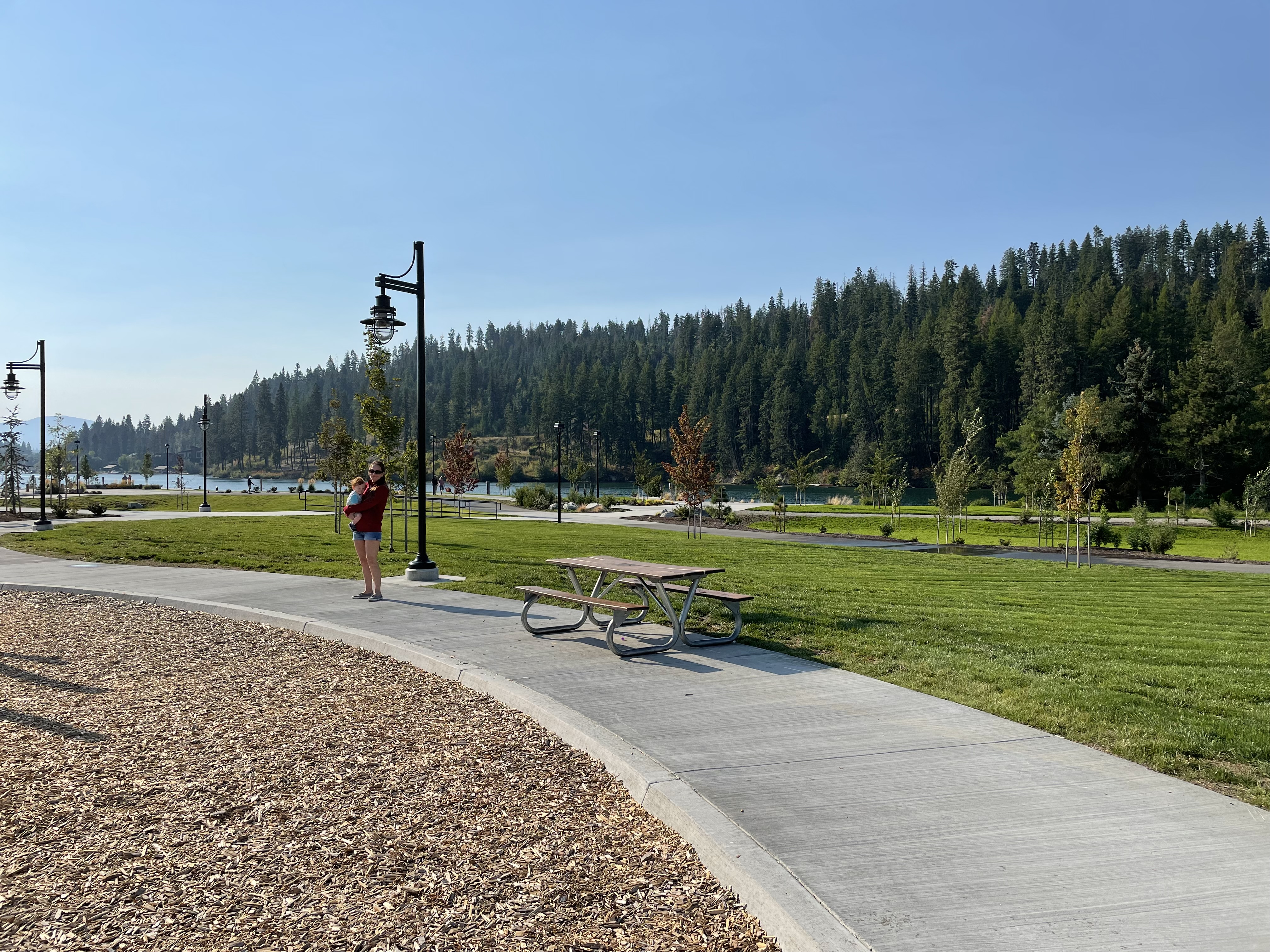
The ability for Americans to get outside and get enjoyable exercise is highly dependent on the availability of recreational developement like park trails, outdoor gyms, and playgrounds. Today I'm going to cover a recent article in the Journal of Lifestyle Medicine by Jay Maddock, PhD that addresses the use and benefits of outdoor settings to promote physical activity.
These include primary and secondary prevention of chornic conditions including cardiovascular disease, diabetes, some cancers, and steoporosis. Immune function is improved, pain control enchanced, the risk of falls reduced, life expectancy extended. Physical activity appears to have a positive effect on ton several aspects of mental health including mood, mild cognitive impairment (memory loss), anxiety, dementia, and depression. - Jay E. Maddock, PhD
Adequate exercise for adults means getting 150-300 minutes a week of moderate physical activity or 75-150 minutes a week of vigrous physical activity and children need 60 minutes daily. However only about 36% of adults are aware of these guidelines, eighty percent of adults are insuficiently active. and many of them overestimate their physical activity. A worthwhile goal for physicians and community leaders is to increase the physical activity and time in contact with nature for their constituents and patients. Lets discuss 4 important supporting topics: benefits beyond physical activity, correlates of PANS, promoting PANS to priority populations, and clinic based actions for health professionals.
Beyond Physical Benefits
One question we can ask is "Does physical activity have improvements beyond improving cardiovascular endurance or strength?" and the answer that we can inutitively feel is yes. We feel relaxed and this was put to the test by Bailey et al. In the experiment one group was asked to exercise indoors and another outdoors. They measured their energy expenditure and kept them the same. Then performed The Stroop Test: a psychological task that demonstrates the Stroop effect, where participants must name the color of a word that is printed in an incongruent color (see below).
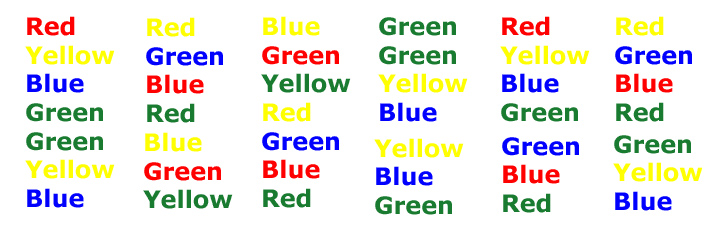
For example, saying "blue" when the word "RED" is printed in blue ink. This creates a delay because the brain automatically wants to read the word, but the instruction requires naming the color. The test measures cognitive interference, attention, and processing speed and is used in research and clinical settings, though it should not be used for clinical diagnosis. The more stressed you are the more difficult it will be to complete the test. Electroencephelograms (EEGs) were also performed and the outside participants were found to have more meditative brain waves. Outdoor bike rides have also been associated with higher levels of socialization, one of the Six Pillars of Foundational Health that I've written on before.
Factors Affecting Promoting Outdoor Play
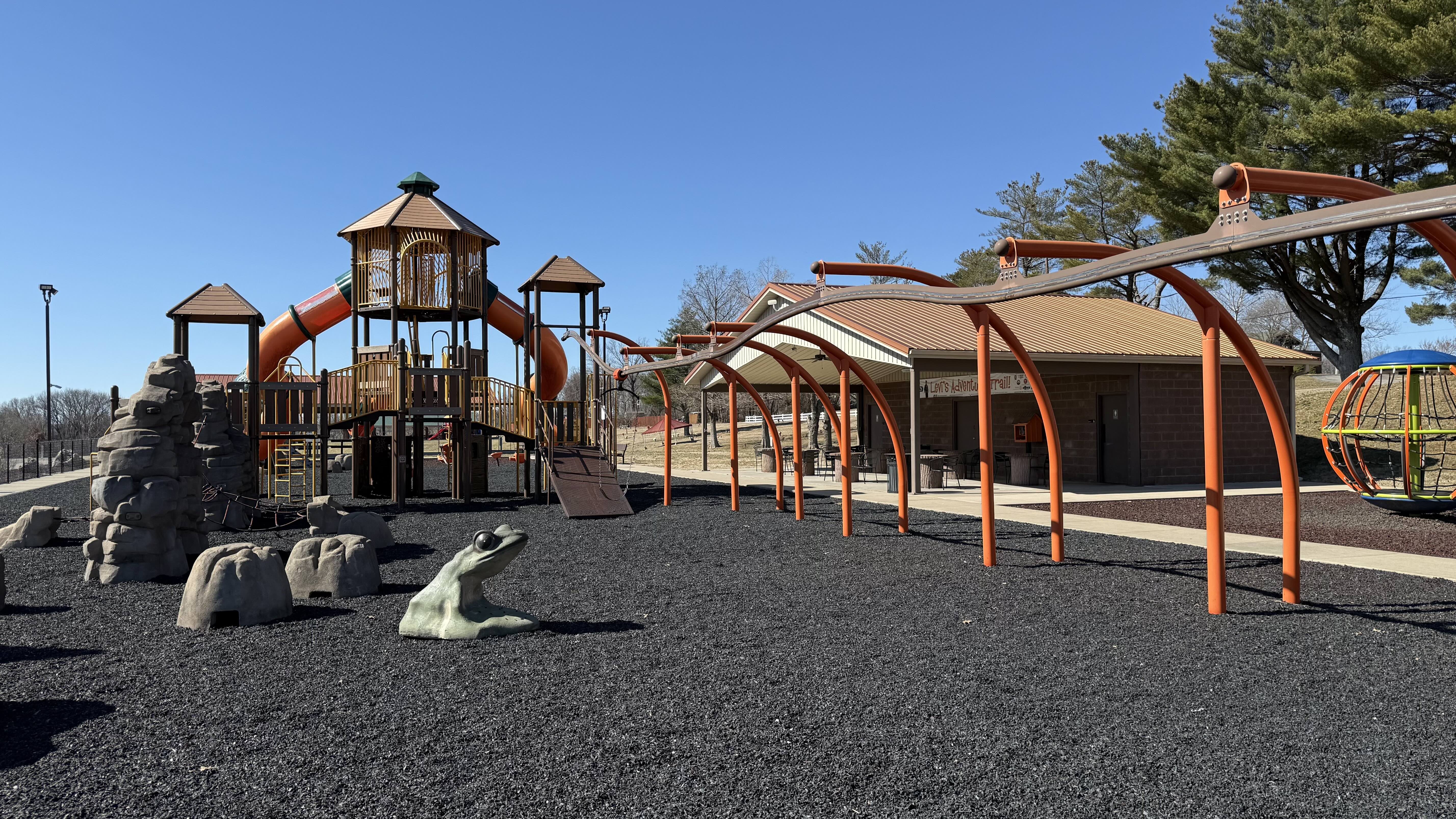
The next question of course is how to encourage and keep more people outside. Increased visits and time outdoors are related to:
- Short distance from place of living to the park
- Cost of Transportation to and from the Park
- Increased walkability (associated with a 2.75 fold increase)
- Physical features: benches, exercise equipment, bathrooms, lighting and paved surfaces, as well as ample tree shade.
- Community Gardens, that also have a positive impact on reducing weight and hypertension.
- Programming : classes, festivals, community services
- Organized Activities : yoga, sports leagues and group walks
- Public Engagement in trail design, operation, and oversight
- Perception of safety and accessibility through active marketing.
Interestingly some people perceive paved trails to be safer than un-paved ones.
Two types of settings especially stuck out to the investigators. Green schoolyards and community gardens. Adding more greenery in the form of trees and grass to school yards appeared to increase physical activity while reducing sedentary time. One thing I have seen work well, in a previous Missouri town I lived in, is school playgrounds that double as public playgrounds once school is out. This represents an aggreement between the city and school, and is a low-cost way to provide a great outdoor space.
Building a nature-connected mindset in children leads to additional strong ties to getting outside as an adult. Through childhood experiences with family, school education such as bird watching, hiking, nature centers, and biophillic environments are all potential avenues for potentiating the benefits of PANS.
The Young, the Old, the Poor, and the Disabled
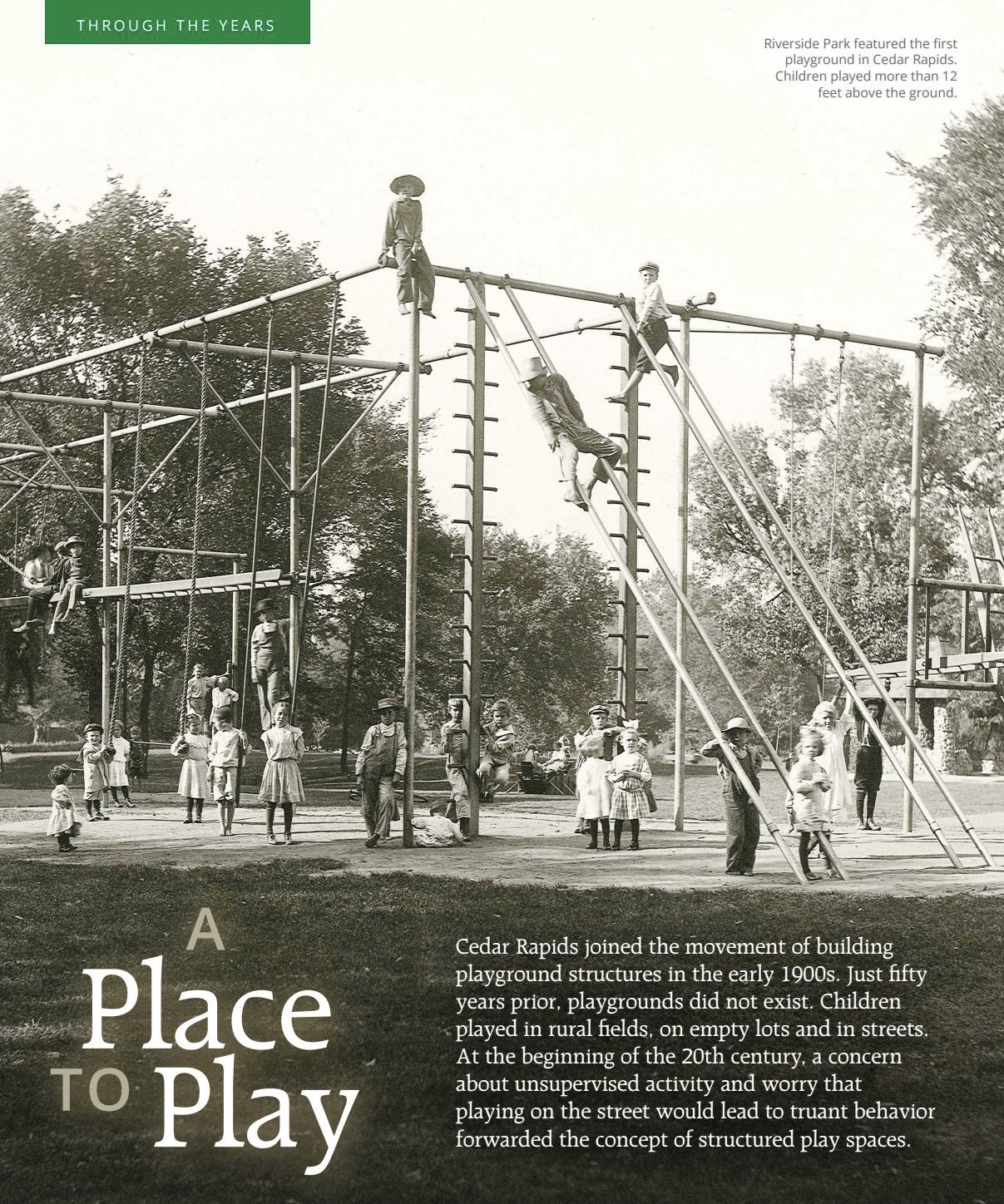
These are all populations that benefit the most from, and are easily excluded from areas of outdoor recreation. Gentrification: the process where an urban neighborhood undergoes transformation from a low-income area to a more affluent one, can displace the original and relatively poorer population. This can unfortunately occur as outdoor spaces are upgraded thus leading to an uptick in property values. Careful planning with the city, developers, and even philanthropists can help to prevent putting the elderly and poor out onto the street. Reviewing income maps, maintenance schedules, and creating inclusive facility designs can all help with the above problems. Children prefer climbing equipment, grassy fields, shade from trees and distinct playzones over playground markings or game equipment. The elderly need bathrooms, water fountains, level pathways, and more seating arrangments due to a lower perceived thirst, arthritis, and difficulty with balance. As many can attest to they greatly prefer social connection and thus programming community walks, tai-chi, and gardening are important to consider. Now lets discuss objectives at the patient-physician level.
Incorporating PANS into the Practice of Medicine
Prescribing a NatureRx or ParkRx prescription can be tried, with consideration of nuances, for anxiety, depression, hypertension, weight loss, stress reduction, sleep, and much more. Integrating vital signs such as "time in nature" with the EMR would help in directing the type of prescription. Designing a prescription handout with a map, address, time spent, and various exercises with their corresponding intensity would provide clarification and guidance for PANS. Community efforts such as"Walk with a Doc" that I have planned during the upcoming fall months, and partnerships with community groups are definitely beneficial. Finally creating non-profit organizations that can serve to promote PANS (and as tax write offs for physicians) create financial avenues to parks and greenspaces.
Example Prescription
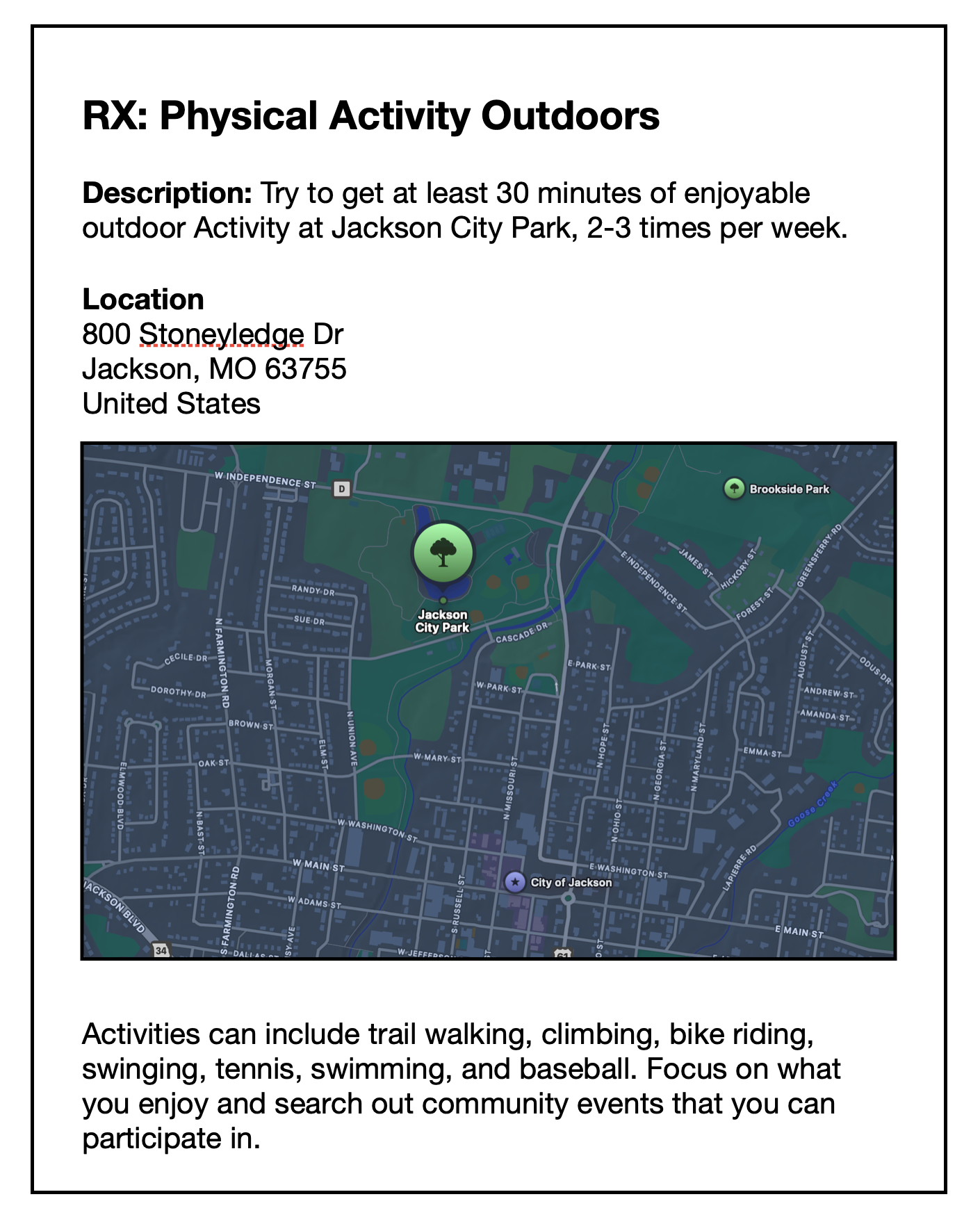
Question: Is there a natural space that you can go and enjoy today?
References
- Maddock JE, Frumkin H. Physical Activity in Natural Settings: An Opportunity for Lifestyle Medicine. Am J Lifestyle Med. 2024 May 11;19(1):73-87. doi: 10.1177/15598276241253211. PMID: 39554918; PMCID: PMC11562474.
-
Piercy KL, Bevington F, Vaux-Bjerke A, Hil ker SW, Arayasirikul S, Barnett EY. Understanding contemplators’ knowledge and awareness of the physical activity guidelines. J Phys Act Health. 2020;17(4):404-411. doi:10. 1123/jpah.2019-0393.
- Gasana J, O’Keeffe T, Withers TM, Greaves CJ. A systematic review and meta-analysis of the long-term effects of physical activity interventions on objectively measured outcomes. BMC Publ Health. 2023;23(1):1697. doi:10. 1186/s12889-023-16541-7.
- Nuzum H, Stickel A, Corona M, Zeller M, Melrose RJ, Wilkins SS. Potential benefits of physical activity in MCI and dementia. Behav Neurol. 2020; 2020:7807856. doi:10.1155/2020/ 7807856.
- Scarpina F, Tagini S. The Stroop Color and Word Test. Front Psychol. 2017 Apr 12;8:557. doi: 10.3389/fpsyg.2017.00557. PMID: 28446889; PMCID: PMC5388755.
- Schnake-Mahl AS, Jahn JL, Subramanian SV, Waters MC, Arcaya M. Gentrification, Neighborhood Change, and Population Health: a Systematic Review. J Urban Health. 2020 Feb;97(1):1-25. doi: 10.1007/s11524-019-00400-1. PMID: 31938975; PMCID: PMC7010901.